 ES
ESWhat is an AI employee and what jobs can it do for your business today
What an AI employee or AI worker is, how it differs from a chatbot and from a person, which jobs it can already do for your business, and how to hire one free.
September 26, 2026 · 6 min read
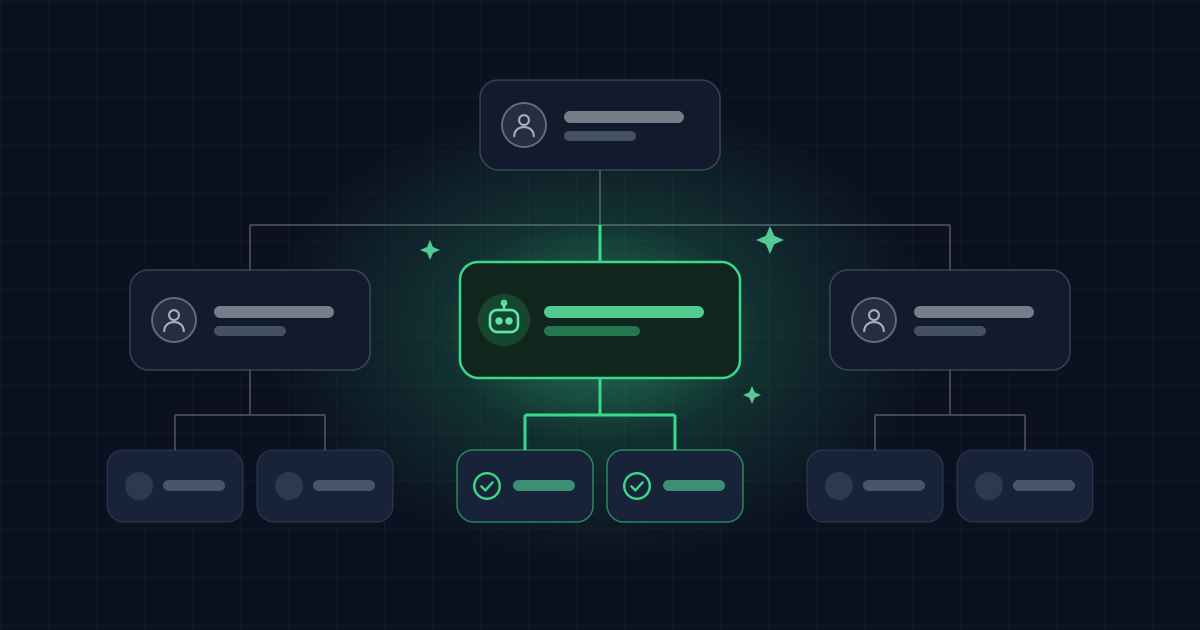
An AI employee, also called an AI worker, is an artificial intelligence agent you give a specific job in your business, such as taking orders, selling from a catalog or booking appointments, and that does it by talking to your customers on channels like WhatsApp. It isn't a program that answers with a menu of buttons: it understands what people write, follows the rules you give it and uses real tools, such as your catalog, your calendar or a payment link.
What sets it apart from other tools is the word "employee": it has a defined job, a manual, a way of introducing itself and a clear limit on what it can and can't do.
Why everyone is talking about AI employees
The term has gone mainstream. On Google Trends, between September 2025 and September 2026, the search "ai employee" averaged a worldwide interest of 48 out of 100, well above terms like "ai receptionist" (6) over the same period. People no longer just search for "chatbot": they search for someone, or something, to do a job.
That shift in wording says a lot. The interest isn't in the technology itself but in the outcome: someone answering WhatsApp, taking the order and not leaving customers waiting.
What exactly an AI employee is
In practice, an AI employee has these parts:
- A job. For example, "Order manager" or "Clinic receptionist".
- An identity. A name and a way of introducing itself to customers.
- A goal. What it has to achieve in each conversation: close an order, book an appointment, answer a question.
- A manual. What it answers, which rules it follows and what it can't say.
- Tools. Your catalog, your calendar, your payment methods, your data.
- Channels. Where it talks to customers: in AgentIQ today, WhatsApp and email.
- A boss. You or your team, reviewing its conversations and correcting what it gets wrong.
AI employee vs. chatbot
The most common confusion is thinking it's the same as a chatbot. It isn't.
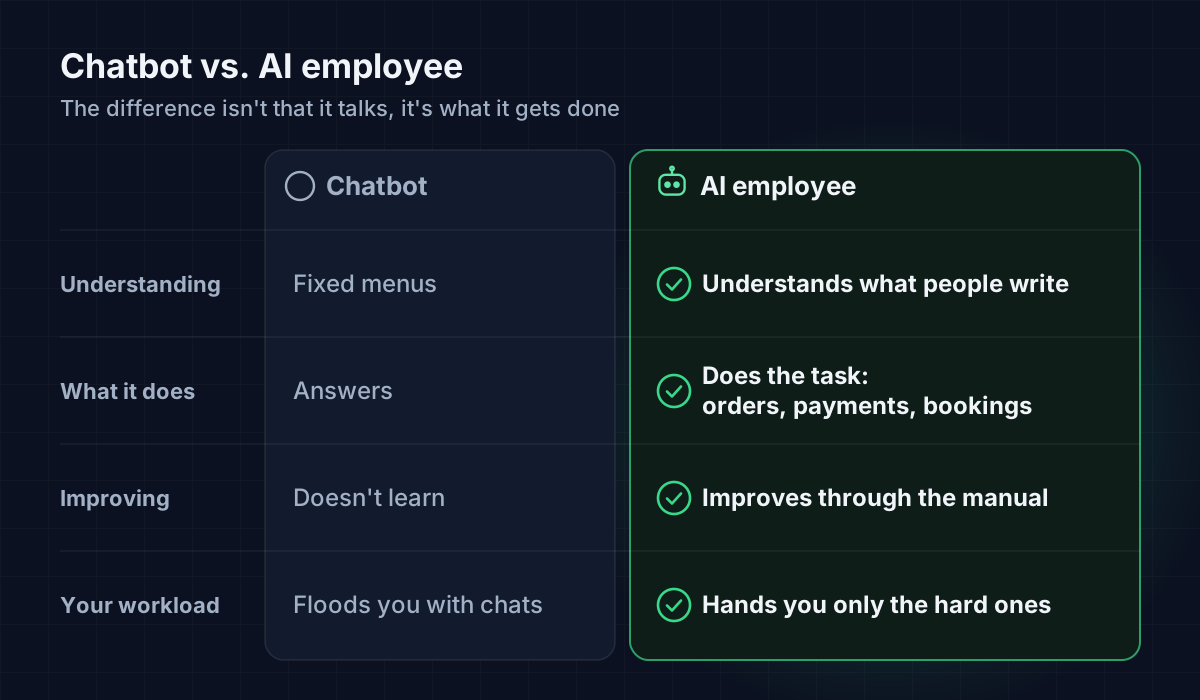
| Traditional chatbot | AI employee | |
|---|---|---|
| How it understands | Buttons and keywords | Natural language, the way people write |
| What it does | Answers predefined questions | Does tasks: orders, payments, appointments |
| How you set it up | A tree of options | A manual in your own words, a catalog and a work process |
| When it doesn't know | Repeats the menu | Hands the conversation to a person |
| How it improves | Redesigning the tree | Correcting answers and sending them to the manual |
A chatbot works for closed questions. An AI employee works when customers write the way people actually write: with typos, changing their minds, asking two things at once.
AI employee vs. human employee
An AI employee doesn't replace your team. It takes over part of the work.
What an AI employee does better:
- Answering at any hour, without someone watching the phone.
- Handling several conversations at once.
- Answering repetitive questions the same way every time: hours, prices, delivery areas.
- Following the same process on every order.
What a person does better:
- Handling an upset customer or a sensitive situation.
- Making decisions that aren't in the manual.
- Negotiating, making exceptions, building relationships.
- Understanding context that isn't written down anywhere.
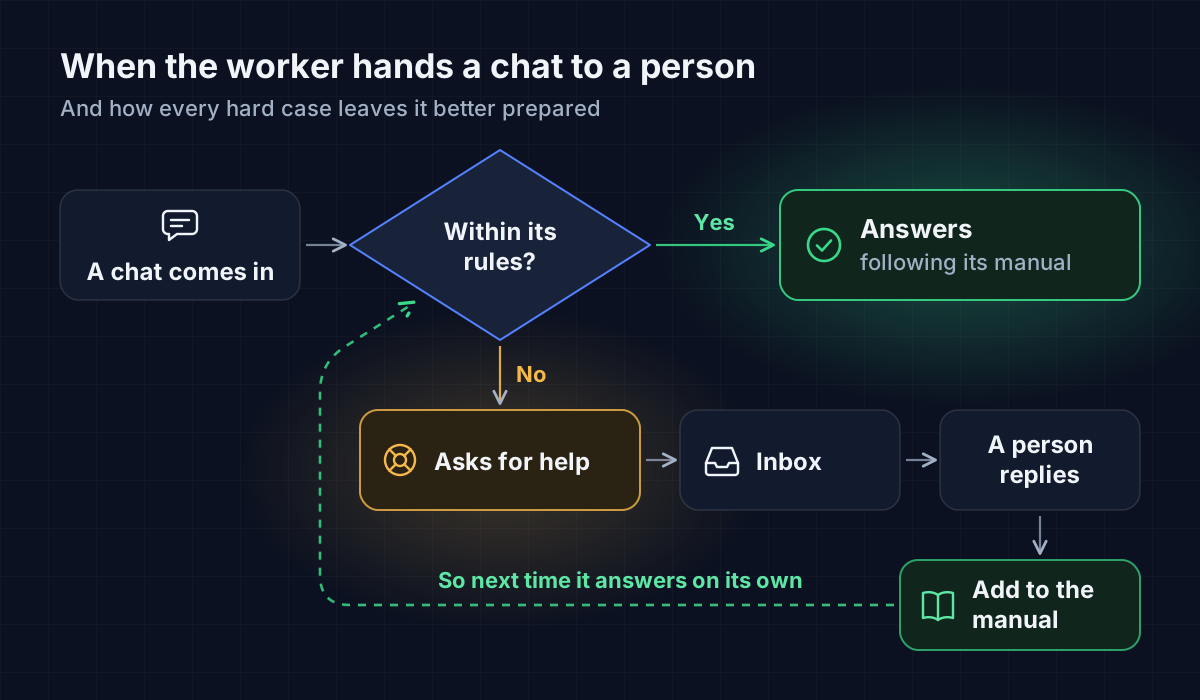
That's why a good AI employee knows when to ask for help. In AgentIQ this is called Ask for help: the worker hands the conversation to a person, and it shows up in your team's Inbox.
Jobs an AI employee can do today
These are jobs an AI employee can already do in a real business, using AgentIQ as an example:
Order and delivery manager
For restaurants. It takes the order with the real menu prices, asks for the location on WhatsApp, charges, notifies the delivery person and handles post-sale. Orders land on the Orders board. More in AI for restaurants: a practical guide.
Catalog sales rep
For shops and retail. It answers questions about your products, recommends, builds the order and sends the charge, for example with a Mercado Pago link or via bank transfer.
Receptionist and scheduler
For beauty, dentistry, veterinary, education or professional services. It explains your services, checks your staff's availability and books the appointment. If you connect Google, the appointment goes into Google Calendar with a Meet link.
Other roles
The AgentIQ Marketplace has workers ready to hire in categories like Sales and prospecting, Marketing and content, Analysis and research, Customer support, and Operations. If none fits, you can describe the role in your own words and build a custom one.
How to "hire" an AI employee for free
In AgentIQ, hiring an AI employee works a lot like filling a position:
- Create your account at app.ageentiq.com/register. No card required.
- Describe your business: name and industry.
- Define the job: name your worker and pick what it needs to do.
- Click Create my worker and choose Continue on Free.
- Give it its tools: upload your catalog or your services.
- Write its manual: what it answers, which rules it follows and what it can't say.
- Test it in the test chat.
- Connect it to WhatsApp and start serving customers.
The free plan includes 9,000 credits per month, about 50 conversations, renews by itself every month and doesn't ask for a card. On that plan the worker signs with AgentIQ branding; paid plans remove it.
Step by step: How to create your first worker. To learn more about the platform, visit the AgentIQ home page.
How to be a good boss to an AI employee
An AI employee improves with the same recipe as a human one: clear instructions and feedback.
- Give it a concrete job. "Handle everything" is too vague. "Take delivery orders" is clear.
- Write the manual as if for a new hire. Short sentences, one rule per line.
- Review its conversations in the first weeks under Inbox > Chats.
- Correct it on real cases. In AgentIQ you fix the answer and click Add to the manual.
- Define when it asks for help. Better to hand off a case in time than to handle it badly.
What an AI employee still shouldn't do
To keep expectations honest:
- It shouldn't make sensitive decisions alone: large refunds, health matters, serious complaints.
- It shouldn't make up information. If something isn't in its manual or catalog, the right move is to say it doesn't know or ask for help.
- It shouldn't pretend to be a person. It's good practice for it to introduce itself as the business's assistant.
Frequently asked questions
What is an AI worker?
The same as an AI employee: an artificial intelligence agent with a defined job in your business, serving customers on channels like WhatsApp, following a manual and using tools like your catalog or calendar.
Will an AI employee replace my staff?
No. It takes care of the repetitive work, like answering questions and taking orders, and hands your team whatever needs human judgment.
How is it different from a chatbot?
A chatbot follows a fixed menu of options. An AI employee understands natural language, completes whole tasks and learns from the corrections you add to its manual.
How much does an AI employee cost?
In AgentIQ you can start free, with 9,000 credits per month (about 50 conversations) and no card. Paid plans include more conversations and remove the AgentIQ signature.
Which channels can it work on?
In AgentIQ, today: WhatsApp and email.
Do I need technical skills?
No. Everything is set up from the dashboard, in your own words. If you prefer, you can also manage your workers from ChatGPT, Claude or Gemini with Connect your AI.
Can I have more than one AI employee?
Yes. You can hire more from the Marketplace or build custom ones, each with its own job.