Stories
Entrepreneur success stories: 6 founders who started with almost nothing (and what to copy this week)
Arturo Calle started with 17,000 pesos and Spanx with $5,000 in savings. Six real founder stories, with sources, and one lesson from each to copy this week.
10 min read

On this page
Entrepreneur success stories usually get told backward. First the giant company, then the garage. Told that way, they look inevitable, as if the founders were always going to make it.
We're telling them from the other end: the moment each one could have fallen apart. Six real stories, three from Colombia and three from farther afield, each with its sources and one concrete thing you can copy this week.
If the Colombian names are new to you, each story opens with a line on what the company is today. Quotes from Spanish-language sources are our translations.
Arturo Calle: 17,000 pesos and the only loan he ever took
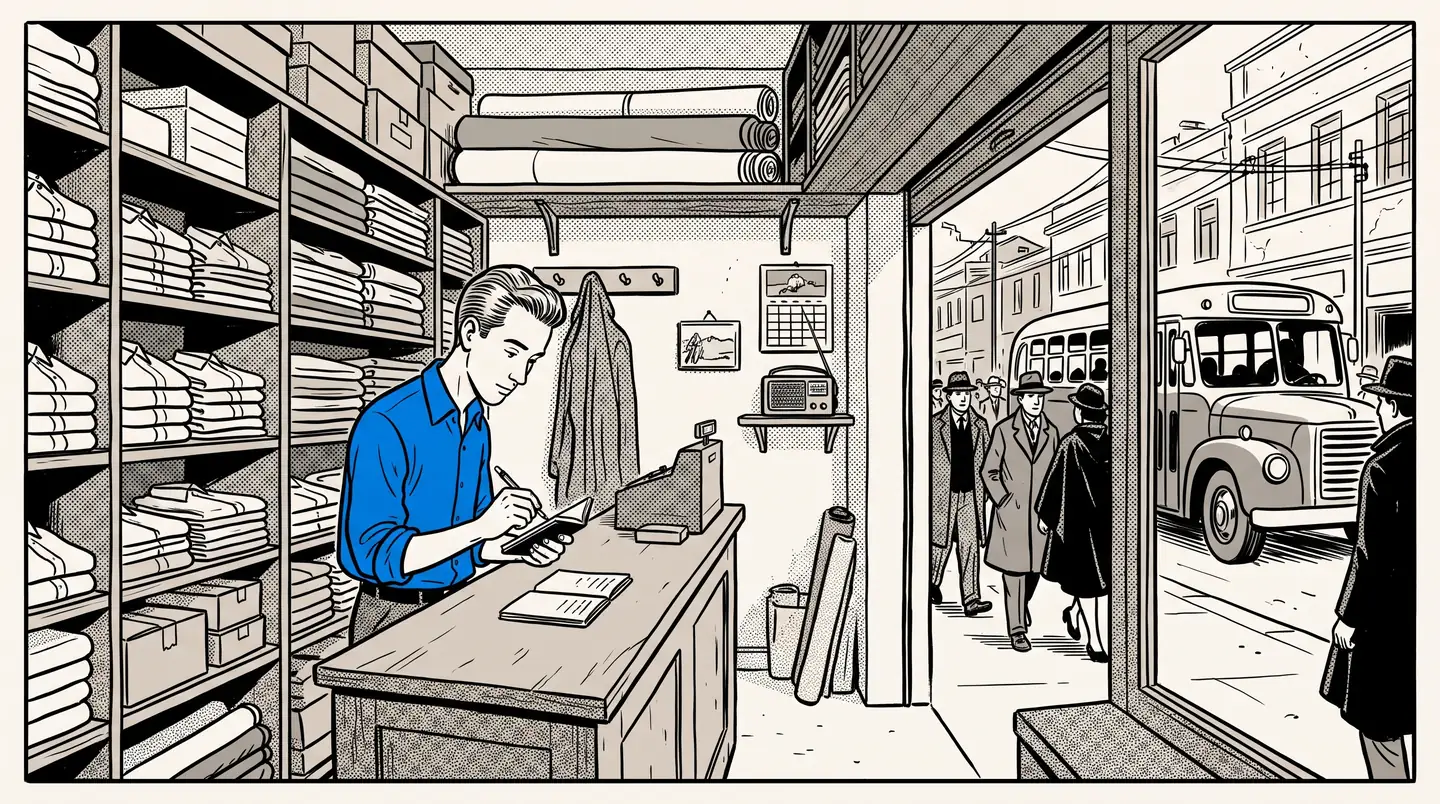
Arturo Calle founded the Colombian clothing company that carries his name, built around menswear. It started with everything he had saved riding on one tiny shop.
He moved to Bogotá in 1958 and worked as an industrial mechanic at a textile mill. To save money he gave up going to the movies. With 13,000 pesos in savings and a 4,000-peso loan, he opened a shop in San Victorino, in downtown Bogotá, measuring just 8 square meters (about 86 square feet), at the corner of Calle 13 and Carrera 14. Within a couple of years he had two more shops in the area, stocked with goods he brought in from Pereira, another Colombian city (Portafolio, in Spanish).
The sources don't agree on the year (1965 or 1966), but they agree on something else: according to Valora Analitik, that 4,000-peso loan was the only debt he ever took on.
Today: the company brought in COP 638 billion in revenue in 2024 and has more than 4,500 employees. Accepting a Forbes Colombia award in 2025, he looked back on starting with little capital and a single employee: "We started with a net worth of 17,000 pesos" (in Spanish).
What you can copy this week: he didn't make anything at first. He resold goods that already existed, and only later switched to his own designs and his own brand. Before you produce your own product, try selling one that's already made. You learn who buys and at what price without betting your savings on a production run.
Crepes & Waffles: the customer who said the waffles were awful
Crepes & Waffles is a Colombian chain of restaurants and ice cream shops. Its first real test came from a single customer.
On April 13, 1980, Beatriz Fernández, then a business student at Bogotá's CESA, and Eduardo Macía opened a small crêpe shop in Bogotá. The idea had been born in the garage of her father's house (El Tiempo, in Spanish).
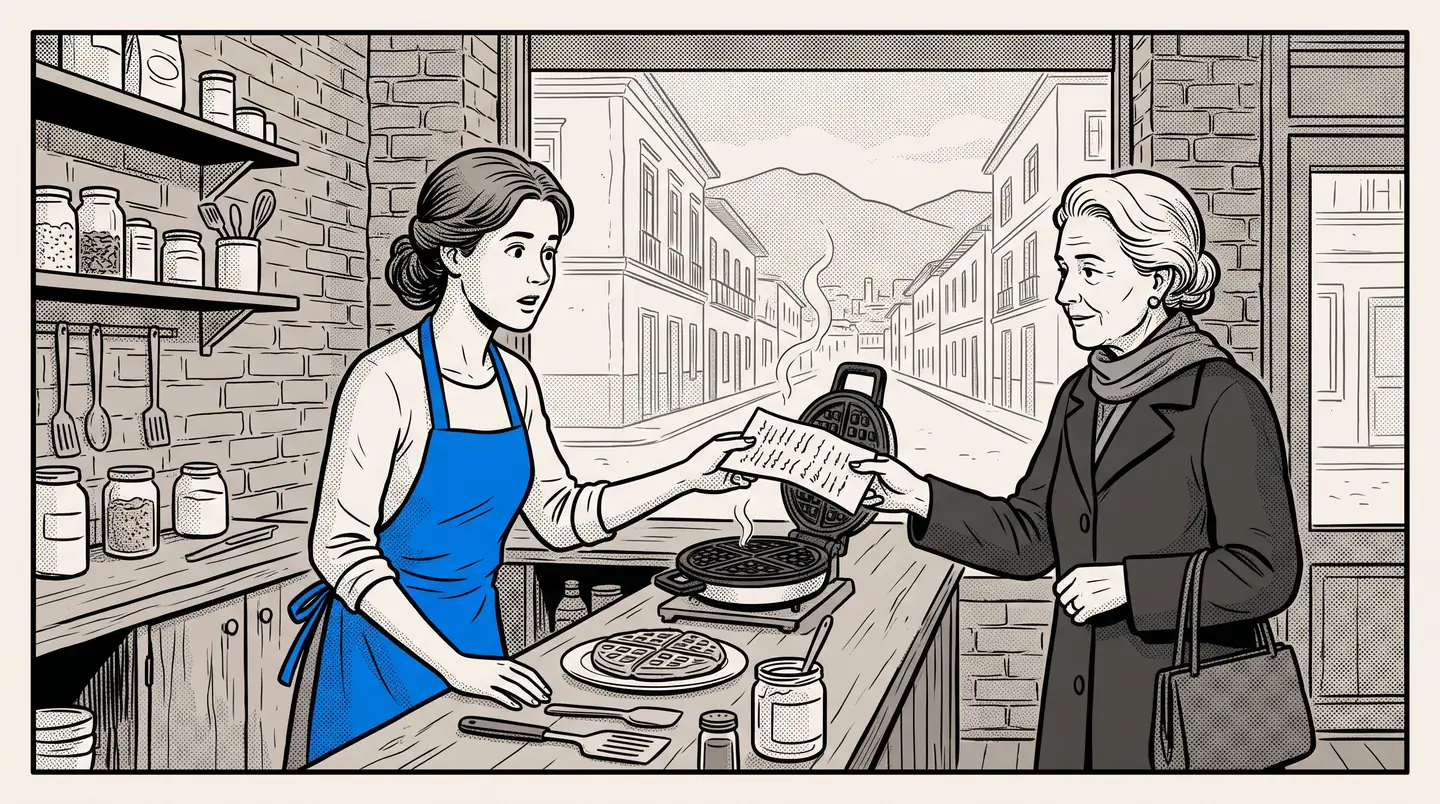
Early on, a woman came in, walked straight into the kitchen, opened the fridge, lifted the lids off the pots, tasted, and told Beatriz: "Honey, your waffles are horrendous!" An hour later she came back with her own recipe written out. As Beatriz told Pulzo in a 2024 interview (in Spanish), it's the recipe they still use today.
Since the 1980s, the company has also had a policy of hiring single mothers who support their households. "Colombia has a woman's face," Beatriz said in an interview with El Espectador (in Spanish).
Today: COP 714.7 billion in revenue in 2023, about US$166 million according to Forbes Colombia, from more than 200 restaurants and ice cream shops in six countries.
What you can copy this week: the harshest feedback you'll ever get is free, and it comes from the person who cared enough to give it. Message your three most demanding customers and ask what they'd change. Don't defend yourself. Take notes.
Mario Hernández: the store a neighbor sold him on credit
Mario Hernández is a Colombian leather-goods brand, known for its leather bags and jackets. Its story starts with a store its founder couldn't pay for.
As a boy, he had to leave his hometown of Capitanejo, in the Santander region, because of the violence (Vanguardia, in Spanish). After his father died, his mother started selling tamales in Bogotá. "I helped her with those sales, and I learned to get around Bogotá on my own," he told Vanguardia (in Spanish). "My first MBA was being orphaned at 10," he told Semana (in Spanish).
In 1972, a neighbor offered him his leather goods store. Hernández told him he didn't have the money. The neighbor sold it to him on credit anyway, and he paid off the debt in six months. In 1978 he bought a stake in a bankrupt leather jacket factory in Cali that had just ten machines and ten employees (in Spanish), and in 1981 he bought out his partner.
Today: the brand has 75 stores in six countries, the United States among them, and more than 1,000 employees, according to El Colombiano in 2023.
What you can copy this week: you don't always have to start from scratch. Some businesses are waiting for someone to take over: a shop with regulars, a small brand, an idle machine. Ask three people in your industry if they know anyone who wants to sell or hand off a business, and whether that person would let you pay out of what you sell.
Sara Blakely and Spanx: show it, don't explain it
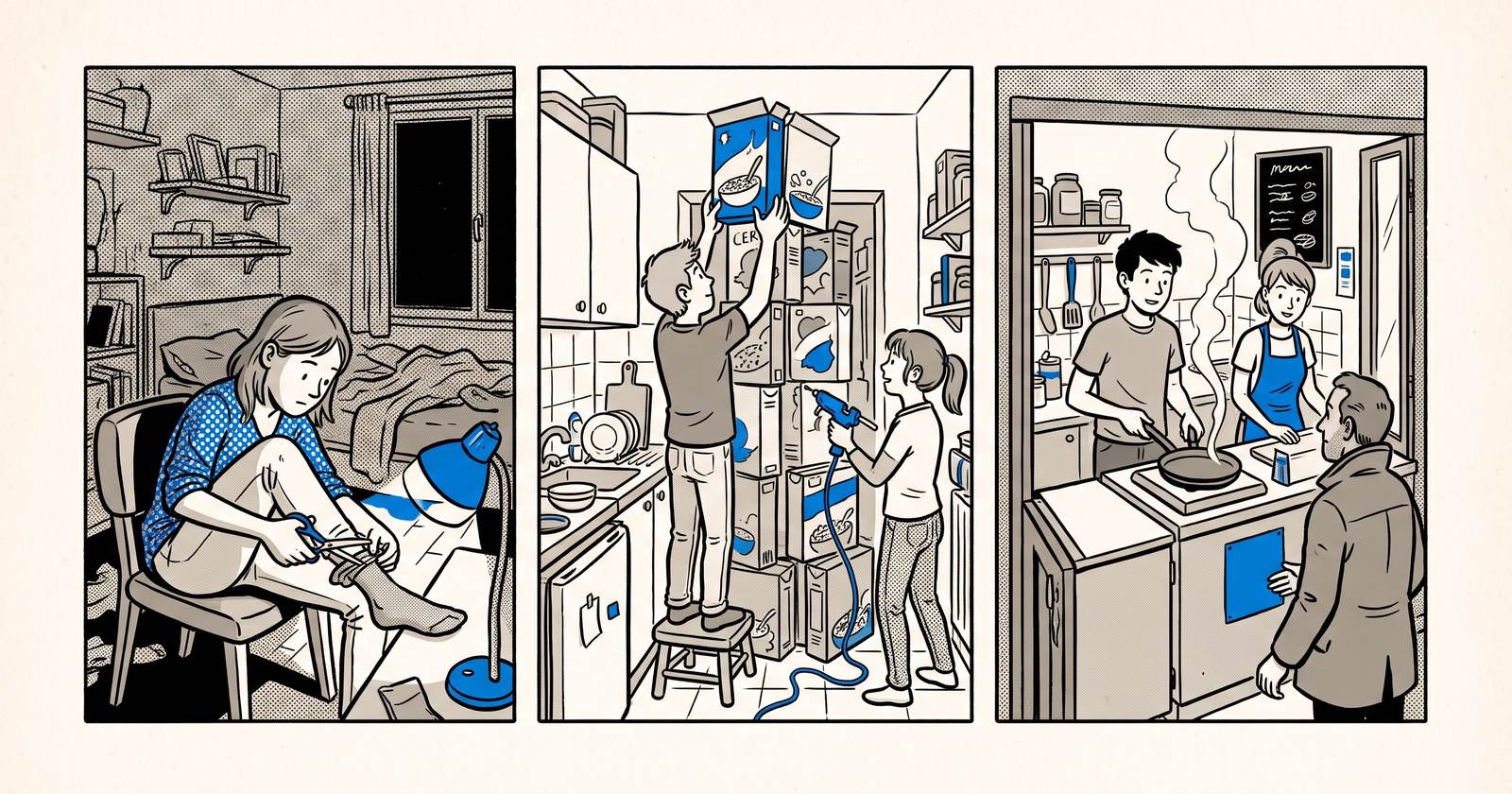
In 1998, Sara Blakely was selling fax machines in Atlanta (Fortune). She'd bought a pair of cream slacks for $78 and wanted to wear them to a party without anything showing underneath. So she cut the feet off a pair of control-top pantyhose. "But they rolled up my legs all night," she told Forbes. The idea stuck anyway.
She set aside her entire savings, $5,000, and spent the next two years planning the launch while keeping her nine-to-five job. To save $3,000 in legal fees, she wrote her own patent with the help of a Barnes & Noble textbook.
Hosiery mills turned her down one after another. At one in Asheboro, North Carolina, she was shown the door, and two weeks later the manager called her back. His daughters, he told her, wouldn't let him pass up her invention.
To get into Neiman Marcus, she landed ten minutes with a buyer at the company's office in Dallas, on the condition that she fly herself there. When she sensed the pitch wasn't landing, she led the buyer to the restroom and modeled her pants with and without Spanx. The buyer's answer: "Oh I get it. It's brilliant—and I'm gonna put it in seven stores." Then Oprah named Spanx her favorite product of the year. "Right when I was running out of friends and money, Oprah called," Blakely said.
Today: in 2021, Blackstone bought a majority stake in Spanx at a valuation of $1.2 billion. As of 2012, Forbes reported, she still owned 100% of the company, had never taken outside investment and hadn't spent a nickel on advertising.
What you can copy this week: stop explaining your product and show it working. A 15-second video of the before and after, or of the product in use, sells better than three paragraphs. In how to sell on WhatsApp we explain why a real video beats a catalog photo.
Airbnb: the cereal boxes that saved the company
In October 2007, Brian Chesky and Joe Gebbia hosted three guests in their San Francisco apartment (Airbnb). By the fall of 2008 they were desperate for cash: Chesky owed about $25,000 on credit cards, and Gebbia owed tens of thousands more (CNBC). Seven investors they'd pitched had either turned them down or never written back (Fortune).
In the middle of the 2008 presidential race, they designed limited-edition cereal boxes: "Obama O's" and "Cap'n McCain's". They sold more than 1,000 boxes and made about $30,000. According to Chesky, that's what won over Paul Graham of Y Combinator: "If you can convince people to pay $40 for $4 boxes of cereal, maybe, just maybe, you can convince strangers" to stay in each other's homes. Y Combinator invested $20,000.
After that, as Graham tells it in his essay "Do Things that Don't Scale", the founders went door to door in New York, recruiting hosts and helping them improve their listings, and took photos of their first hosts' apartments themselves.
Today: $12.2 billion in revenue in 2025 and more than 5.5 million hosts.
What you can copy this week: do things that don't scale. Serve your first 30 customers by hand: message them yourself, ask how it went, take the photos yourself. What you learn there, no report will teach you.
Nubank: the house with one bathroom
In 2008, David Vélez, a Colombian who had moved to Brazil to open an office for a private equity fund, needed five trips to the branch and five months to open a bank account in São Paulo (Stanford GSB). That frustration became the idea for a digital bank.
Nubank got going in 2013 with a $2 million seed round, so it didn't start "with nothing." What was bare-bones was everything else: a small rented house on California Street, in São Paulo's Brooklin neighborhood, where co-founder Edward Wible lived rent-free upstairs and about 30 people ended up sharing a single bathroom. Most of the CTO candidates Vélez interviewed didn't believe the company would succeed, and it took three years of regulatory hoops to get a banking license.
Today: 139 million customers in the second quarter of 2026, more than 5 million of them in Colombia.
What you can copy this week: write down the five biggest frustrations you've had as a customer in your industry. The one that makes you angriest, and that the most people share, could be your offer.
What they have in common
| Story | What they started with | What they did differently |
|---|---|---|
| Arturo Calle | 17,000 pesos and 86 square feet | Resold before manufacturing; never borrowed again |
| Crepes & Waffles | A small shop and a bad recipe | Turned a customer's criticism into the product |
| Mario Hernández | A store bought on credit | Took over a business someone was letting go, then a bankrupt factory |
| Spanx | $5,000 in savings | Showed the product working instead of explaining it |
| Airbnb | Credit card debt and seven rejections | Sold cereal boxes and did things that don't scale |
| Nubank | A house with one bathroom | Solved a frustration the founder lived through himself |
None of them waited until everything was ready. They all sold before they were sure, talked to their customers in person and watched every peso and every dollar. And none of them did it alone: there was a partner, a neighbor who extended credit, a woman with a recipe, a mill manager's daughters who wouldn't let him say no.
If you're starting today
Starting with little no longer means starting alone. Today you can put a team together before you can afford one: AI agents that answer your customers on WhatsApp, follow up and prepare your content while you do what these founders did, which is talk to people.
With Ageentiq, you start with your goal ("my first 30 sales," for example), see it as a map of steps and get one concrete step every morning. If fear is what's holding you back, first read what Seneca and Marcus Aurelius would tell you before you start.
Frequently asked questions
What are some businesses that started with almost nothing?
Arturo Calle started with 17,000 pesos and an 8-square-meter shop in Bogotá; Sara Blakely, with $5,000 in savings; Mario Hernández, with a store a neighbor sold him on credit. Airbnb stayed alive by selling cereal boxes.
How did Spanx start?
In 1998, Sara Blakely cut the feet off a pair of control-top pantyhose to wear under cream slacks. She put $5,000 in savings into it, wrote her own patent and won over Neiman Marcus by showing a buyer the pants with and without Spanx.
How did cereal boxes save Airbnb?
In 2008, with the founders deep in credit card debt, they sold "Obama O's" and "Cap'n McCain's" cereal boxes for $40 each and made about $30,000. Chesky says the stunt is what convinced Paul Graham, and Y Combinator invested $20,000.
Who founded Nubank?
Colombian entrepreneur David Vélez, along with co-founders Cristina Junqueira and Edward Wible, launched it in 2013. The idea came after it took Vélez five visits and five months to open a bank account in São Paulo.
What companies started in a garage?
Crepes & Waffles was born in the garage of Beatriz Fernández's father's house before its first shop opened in Bogotá in 1980. In the US, the classic example is Apple. Airbnb started in an apartment.
How can I start a business with little money?
Sell before you produce (resell or take preorders), start in a space or on a channel that costs you little or nothing (WhatsApp, for example), serve your first customers yourself and don't take on debt until you know what sells. All six stories above followed some version of that.
How much money do you need to start a business?
It depends on the business, but in these stories what mattered most at the start wasn't capital, it was landing the first sale. Work out the minimum you need to sell your first unit, not to build the whole company.
Get new posts by email
One email when we publish: ideas to sell more, get more done and use AI in your business, with sources. Unsubscribe in one click.
By subscribing you accept our privacy policy.